

Your Content, Their Culture
What to do when your content unexpectedly reaches a culture or audience you weren't creating it for.
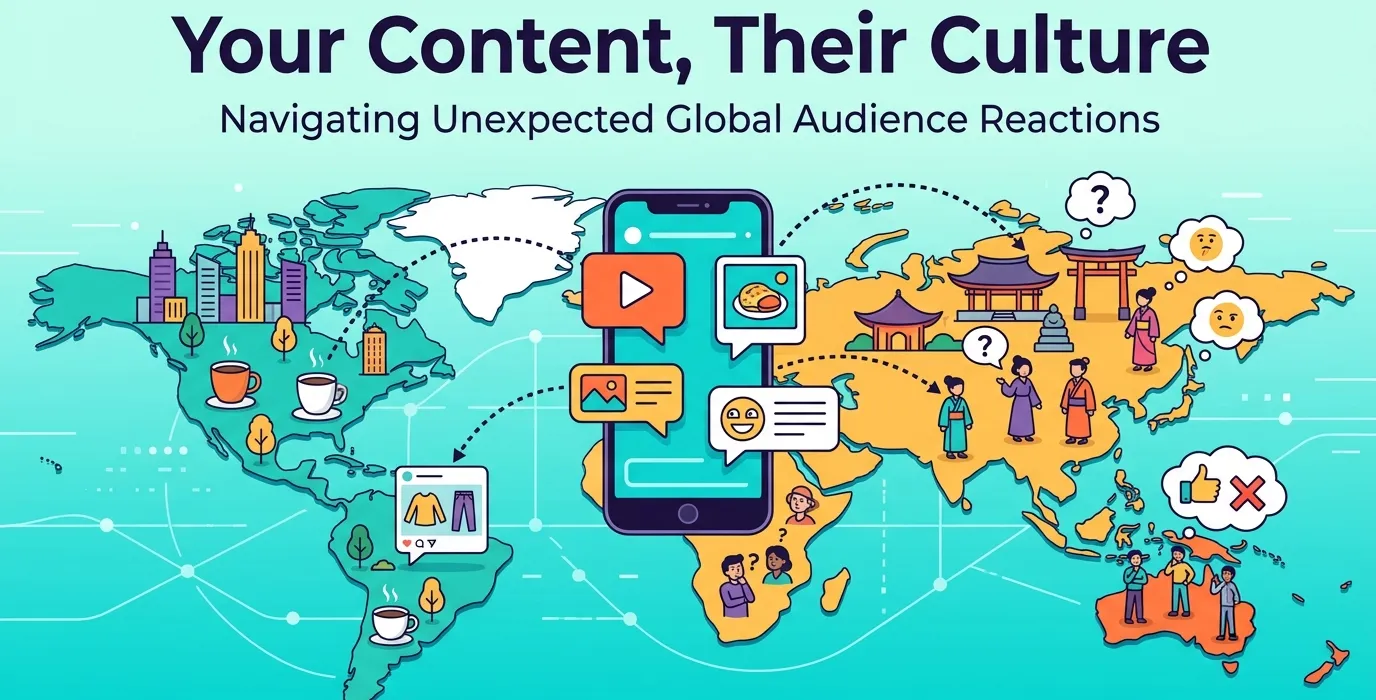
Your Content, Their Culture
Most creators plan for their content to travel within a niche.
A cooking account expects other cooking accounts to find it. A gaming clip expects other gamers.
Nobody really plans for a video to suddenly take off in a country or culture they weren’t making it for, because there’s no format for that, and no obvious next move once it happens.
The Comfort Food Clip That Traveled Without Context
A creator posted a quick weeknight casserole recipe, the kind of dish that’s a basic staple in her own country and needs no explanation there.
The video started getting traction in a region where several ingredients weren’t sold locally, and where the dish itself read as unfamiliar rather than comforting — more of a curiosity than something people recognized.
Comments filled up with people asking what half the ingredients even were, while others treated the video more like a glimpse into a foreign kitchen than a recipe they planned to cook.
She had to decide whether to:
- Make a follow-up addressing substitutions and context for people encountering the dish for the first time.
- Leave the original as it was and let it function as a cultural snapshot rather than a tutorial.
She chose a short follow-up explaining a few swaps, without turning her page into a general “cook this anywhere” resource.
The follow-up did fine.
Her main content stayed as regionally specific as before, and she didn’t chase the new audience beyond that one video.
The Meme That Meant Something Else Somewhere Else
A creator posted a meme format that was purely comedic in her own context — a reaction clip with no political intent.
It started getting reposted heavily in a country where the same visual language had taken on a specific political meaning she hadn’t known existed.
People were tagging her into a conversation she never intended to be part of.
She had two real options:
- Post something clarifying her original intent.
- Stay silent and let the reinterpretation run its course without her involvement.
She chose silence, reasoning that stepping in would only pull more attention toward a meaning she didn’t want attached to her account.
The moment passed within a couple of weeks.
No lasting effect either way, which was itself the outcome she was hoping for.
The Outfit Post That Read as a Statement
A fashion creator posted an everyday outfit, nothing intentionally provocative by her own cultural standards.
It picked up unexpected attention in a region where the same combination of pieces read as a deliberate statement about modesty and identity, rather than a neutral style choice.
She hadn’t set out to make any kind of statement and didn’t want to be pulled into a conversation she had no real stake in.
She addressed it briefly in one comment, clarifying that it wasn’t intended as commentary, and left it there instead of writing a longer post about it.
Some people accepted the clarification.
Some didn’t.
She didn’t post a follow-up, and the attention faded on its own timeline instead of hers.
The Trend Clip That Got Adopted for the Wrong Reason
A short clip set to a trending sound picked up massive traction in a country where the sound itself had recently become associated with an unrelated cultural moment — something the original creator had no connection to and no context for.
New viewers were engaging with the sound, not really with her content underneath it.
She had to decide whether to:
- Ride the unexpected wave with more posts in the same format, knowing the attention wasn’t really about her.
- Step back and let the trend and her account separate again naturally.
She chose to post once more in a similar style, tracked the response, saw it was still mostly about the sound and not her, and went back to her usual content.
No harm done.
No lasting audience gained either.
What This Actually Asks of a Creator
None of these moments called for a crisis response or a cultural studies lecture.
They mostly called for the same quiet judgment call:
Is this attention actually about me, or about something my content happened to intersect with?
The creators who handled it well weren’t the ones with a rulebook ready.
They were the ones willing to wait a beat before deciding whether to lean in, clarify, or just let it pass.